Skip to product information
1 of 2

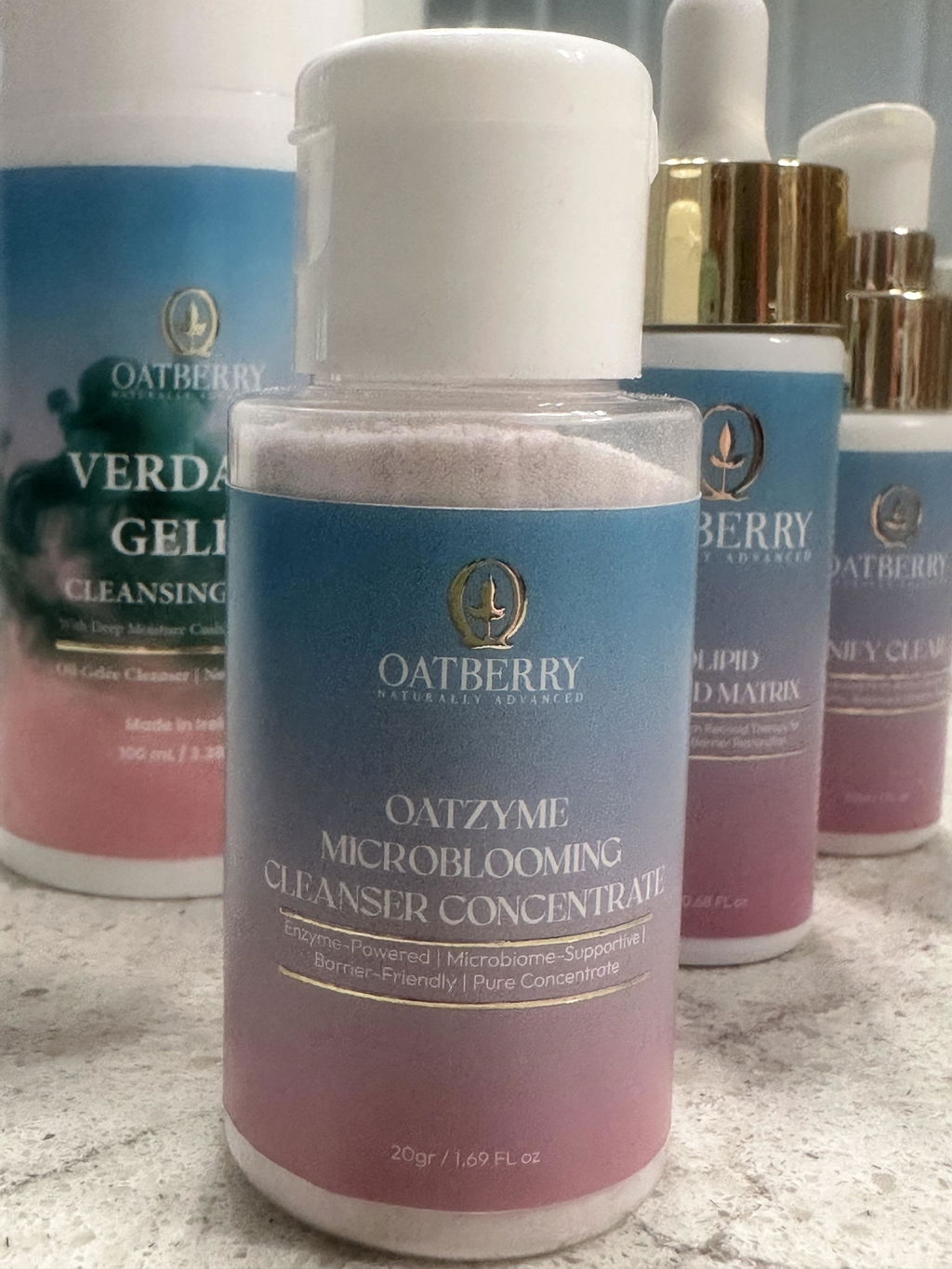
Oatzyme Microblooming Cleanser

Oatzyme Microblooming Cleanser

Regular price €29,95 EUR
Regular price Sale price €29,95 EUR
Sale Sold out
Taxes included.
Size
Quantity

Oatzyme Microblooming Cleanser Concentrate

Enzyme-Powered | Microbiome-Supportive | Barrier-Friendly

Experience a next-generation cleanse with 50% gentle amino acid surfactants for deep yet non-stripping purification and 50% active care complex featuring protease and lipase enzymes, hydrolysed oat proteins, and prebiotic inulin to exfoliate, nourish, and support healthy microbiome. Coconut milk provides essential lipids for a soft, hydrated finish, leaving skin refreshed, balanced, and resilient.

Powered by Microbloom Technology, this concentrated powder cleanser transforms into a luxurious, creamy lather, gently resurfacing while reinforcing your skin barrier. Waterless, sustainable, and travel-friendly—the future of cleansing is here.

View full details

Ingredients

Active Ingredients:

Coconut milk,

Enzymes,

Prebiotics,

Oat Protein

Ingredients:

Sodium Lauroyl Glutamate, Sodium Myristoyl Glutamate, Maltodextrin, Cocos Nucifera (Coconut) Milk, Hydrolysed Oat Protein, Algin, Lauroyl Lysine, Bentonite, Inulin, Fructose, Lipase, Protease, Ultramarines (CI 77007), Iron oxides (CI77499)

Deeper Insights

Key Benefits

50% Gentle Amino Acid Cleansers – Hydrating, non-stripping cleansing power

50% Active Care Complex – Enzymes, prebiotics, and oat proteins for barrier support

Enzyme-Activated – Protease & lipase gently refine and smooth skin texture

Microbiome-Supportive – Prebiotic inulin fosters a balanced skin environment

Coconut Milk & Oat Protein Infusion – Nourishes and maintains moisture retention

Waterless & Eco-Conscious – Concentrated formula for sustainability & travel-friendly use

How To Use

Dispense a small amount into wet hands, activate with water to create a rich, creamy lather, and gently massage onto the skin. Rinse thoroughly. Use daily for a fresh, clear, and balanced complexion.

Best for: All skin types, including sensitive and microbiome-compromised skin.

Know it ALL

A new era of cleansing where science meets skin harmony.

Oatzyme Microblooming Cleanser Concentrate is an ultra-gentle, enzyme-activated powder cleanser designed to purify, exfoliate, and fortify the skin in one luxurious step. With a 50% Gentle Amino Acid Surfactant system, it delivers a deep yet non-stripping cleanse, maintaining the skin’s natural moisture balance while supporting a healthy, resilient microbiome.

At the heart of the formula lies the 50% Active Care Complex, a high-performance blend of protease and lipase enzymes, hydrolysed oat proteins, and prebiotic inulin, working synergistically to defend, refine texture, nourish, and reinforce the skin’s defence system. Coconut milk extract infuses the skin with essential lipids and hydration, leaving it soft, balanced, and refreshed.

Powered by Microbloom Technology, this intelligent formula promotes microbiome balance, enhances barrier function, and encourages a clear, radiant complexion all while being waterless, sustainable, and travel-friendly.

Scientific References

Clinically Proven Ingredients

📄 Amino Acid-Based Cleansers (50%) – Clinically shown to effectively cleanse while maintaining hydration and barrier integrity (Ananthapadmanabhan KP et al., J Soc Cosmet Chem. 2004).

📄 Protease & Lipase Enzymes – Scientifically proven to gently exfoliate, unclog pores, and improve skin texture without irritation (Pillai S et al., Int J Cosmet Sci. 2010).

📄 Hydrolyzed Oat Protein – Demonstrated to enhance skin hydration, reduce TEWL (transepidermal water loss), and fortify barrier function (Dal’Belo SE et al., J Dermatol Sci. 2006).

📄 Prebiotic Inulin – Supports beneficial skin microbiota, reducing sensitivity and reinforcing the skin’s natural defenses (Hacini-Rachinel F et al., Exp Dermatol. 2019).

📄 Coconut Milk Lipids – Rich in nourishing fatty acids, coconut milk helps retain hydration and protect against environmental stressors (Nevin KG et al., J Cosmet Sci. 2010).